
Featured collection
Made for Riders, with your feedback.
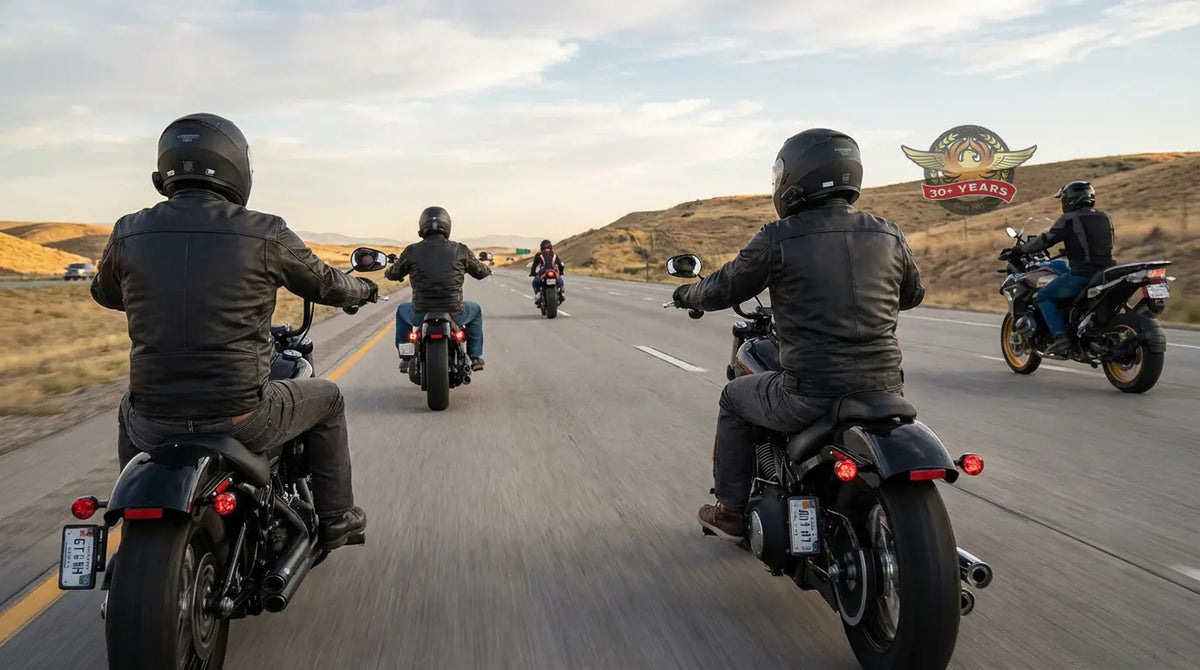
There’s a reason this question keeps coming up. Riders don’t debate wired vs wireless motorcycle comms because they’re bored — they debate it because nobody wants a system that flakes out halfway through a ride. Reliability isn’t a spec-sheet talking point. It’s whether your system works when you need it, without babysitting it.
The short answer is that wired systems used to be more reliable. The longer answer is that reliability now depends on how you ride, not the label on the box.
Old-school wired communication systems earned their reputation through physical certainty. A cable meant a fixed connection. No pairing failures. No dropped links. If the wire was intact, the system worked.
The tradeoff was always physical vulnerability. Wires fatigue, connectors loosen, and environmental stress doesn’t announce itself before something fails.
Modern wireless systems don’t struggle the way early Bluetooth units did. Signal stability is influenced more by environment and rider spacing than by the technology itself.
Wireless systems rarely fail outright. They adapt, reroute, and reconnect — which can feel unreliable if you expect static behavior, but can be more forgiving in dynamic group riding.
Wired systems reward consistency. Same bike, same helmet, same partner. Wireless systems reward adaptability — multiple riders, regrouping, changing conditions.
Reliability depends on whether your riding environment stays fixed or constantly changes.
Wired systems fail mechanically. Wireless systems fail digitally. Mechanical failures tend to be final until repaired. Digital failures are often temporary and self-correcting.
On long rides, recovery behavior matters more than perfect uptime.
When comparing options in a communication systems collection, wired vs wireless shouldn’t be framed as old versus new. It’s rigid versus adaptive.
Neither approach is universally more reliable. They’re reliable in different ways, for different riders, under different conditions.
Made for Riders, with your feedback.

Our 30th Anniversary Logo isn’t just about Eagle Leather — it’s about honoring the riders who’ve kept us rolling since 1995. Every element reflects the...

When it comes to staying safe on the road, your gloves are more than just an accessory—they’re essential. Good gloves protect your hands, provide a...


