
Advanced Polycarbonate Compound :By blending high-grade polycarbonate with high impact strength and ABS in an optimalratio, HJC has developed a shell that is both strong and impact-resistant while maintaining a lightweight designWind tunnel-testedVENTILATION “ACS” Advanced Channeling Ventilation System:Full front-to-back airflow flushes heat and humidity out of the helmetPinlock Ready HJ-43 Visor: Provides 99% UV protection, Anti-Scratch coatedINTERIORMoisture wicking & quick drying fabricCrown and Cheek pads: Removable and washableCheek pads: interchangeable throughout all sizesChinstrap: Micro buckleGlasses Grooves accommodates riders with eyewear
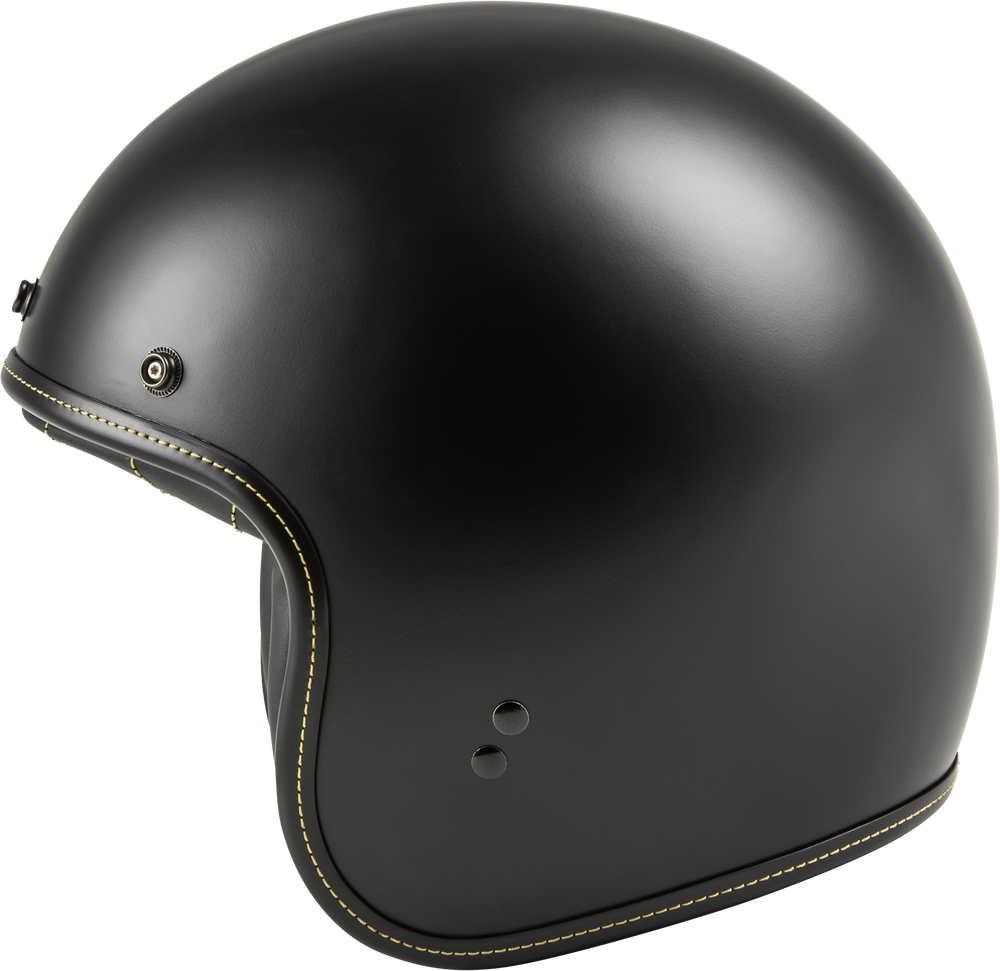
The .38 helmet from Highway 21 is the perfect no nonsense, three quarter helmet for your ride. DOT approved and crafted from lightweight fiberglass, the .38 features a removable quilted comfort liner, a 3 snap configuration for visor or shields, and a padded strap and D ring chin attachment. Classic style and good looks are the hallmark of the .38 helmet from Highway 21.
Features:
D.O.T. approved
Durable lightweight fiberglass shell
Dual Density EPS (expanded polystyrene) Interior
Coolmax® comfort liner & cheek pads
Washable and replaceable interior
Dual D-rings secure the chinstrap
3 snap visor/shield system
Protective helmet bag
HELMET SIZING CHART
SIZE
US HAT SIZE
INCHES
CM
X-Small
6 5/8-6 3/4
20.50-21.25
53-54
Small
6 7/8-7
21.25-22.00
55-56
Medium
7 1/8-7 1/4
22.00-23.00
57-58
Large
7 3/8-7 1/2
23.00-23.75
59-60
X-Large
7 5/8-7 3/4
24.00-24.50
61-62
2X-Large
7 7/8-8
24.50-25.25
63-64
Helmet with a sporty design, perfect for city commuters. Very light and safe thanks to its shell in KPA. Maximum ventilation thanks to the two large air inlets. Micrometric buckle makes for a secure fit and easy off and on. Wide visor with anti-scratch treatment. Drop-down sun visor.
MATERIALKPA
WEIGHT1250 (±50 gr.)
From city streets to wide open roads, the J-Cruise 3 offers elevated touring performance in a premium open-face design.
Experience the Shoei J-Cruise 3, a lightweight and sporty helmet designed for superior comfort and protection. Its AIM shell comes in four sizes for a perfect fit, while the multi-piece EPS liner boosts impact absorption and ventilation. Optimized airflow flows through upper inlets and rear outlets, enhanced by wind tunnel-engineered aerodynamics and an integrated spoiler. Customize the fit with the 3D center pad and enjoy convenience with a stainless steel micrometric chin strap and removable, washable liner and pads. Ready for seamlessly integrated communication, it supports the Sena SRL3 Mesh Communication system sold separately. Ride smarter and safer with J-Cruise 3
An open face helmet, also called a three quarter, covers the top, sides, and back of the head and leaves the face and chin exposed. You get better airflow, an unobstructed view, and the ability to talk or drink without removing anything. What you give up is chin and face coverage, and open face helmets are noticeably louder at highway speed than an enclosed helmet.
Frequently Asked Questions About Open Face Helmets
What does an open face helmet actually protect?
An open face helmet, also called a three quarter, covers the top, sides, and back of the head and leaves the face and chin exposed. That is the whole trade. You get better airflow, an unobstructed field of view, and the ability to talk, drink, or put on glasses without removing anything. What you give up is chin and face coverage, which a full face or a closed modular provides. Riders who choose open face usually do so for around-town riding, warm weather, or the feel of it, and accept the exposure knowingly rather than by accident.
Do I need goggles or a visor with an open face helmet?
In Washington, yes, unless your motorcycle has a windshield. State law requires glasses, goggles, or a face shield when riding without one, and an open face helmet does not satisfy that on its own unless it has a shield fitted. Some open face helmets come with a flip-down shield, some accept one as an accessory, and some are built for use with goggles. Washington also restricts tinted eye protection, which cannot be used from a half hour after sunset to a half hour before sunrise or any time visibility drops below 500 feet, so a clear shield or clear goggles is the reliable default here. Rules vary by state, so check where you ride.
Can I wear an open face helmet in the rain?
You can, but rain hits your face directly, and at 50 mph that stings. A flip-down shield helps a great deal and is the difference between tolerable and miserable in Pacific Northwest weather. Cold is the other factor, since wind chill on an exposed face at 40 degrees is genuinely uncomfortable within a few miles, and a neck gaiter or balaclava only covers part of it. If you ride year round here, most riders end up with an open face for summer and something enclosed for the wet months. If you only want one helmet for Washington riding, a full face or modular is the more practical choice.
Are open face helmets loud?
Louder than a full face, yes. A full face seals around your head and routes air over a closed shell, while an open face leaves your face and the underside of the helmet exposed to turbulent air. The difference grows with speed and is most noticeable above about 50 mph. Earplugs are the practical answer and are worth wearing under any helmet on the highway, since sustained wind noise causes hearing damage over years rather than in one ride. A windshield on the bike also cuts open face noise considerably.
Will a communication system fit an open face helmet?
Usually, though open face helmets have less room than a full face and fewer places to put the clamp. Speakers go in the ear pockets if the liner has them, and the microphone is the harder part, since there is no chin bar to mount a boom to. A boom mic on a short arm generally works better than a wired mic on an open face. Expect more wind noise on the microphone than a rider in a full face would get, which matters more for intercom than for music. Bring your helmet to our Lakewood store and we will check the fit against the systems we carry, and if you buy the system from us we will install it at no additional charge.
Are open face helmets DOT rated?
Yes. An open face helmet can be certified to the same federal standard as a full face, and a DOT-certified open face is legal for road use in Washington. Less coverage does not mean uncertified. What is not legal is a novelty helmet, meaning a shell sold without DOT certification, and those are common in the half and open face shapes because they look similar to the real thing. We do not stock novelty helmets. Certifications are listed on each product page, and the certification sticker is on the helmet itself.