
Why group communication usually breaks down
Group rides don’t fall apart because riders don’t know what they’re doing. They fall apart because communication systems assume perfect spacing and fixed positions. The moment someone drops back or changes pace, traditional connections start failing.
How mesh motorcycle communication actually works on the road
Mesh motorcycle communication treats every rider as part of a shared network instead of a fragile chain. Communication routes itself through whoever is in range, adapting automatically as the group stretches, compresses, or reshuffles.
What changes when one rider drops out or rejoins
With mesh networking, the group keeps talking even if a rider falls back for traffic or fuel. When they rejoin, the system reconnects them automatically—no re-pairing, no resets, no interruptions.
Why mesh matters more for large group riding
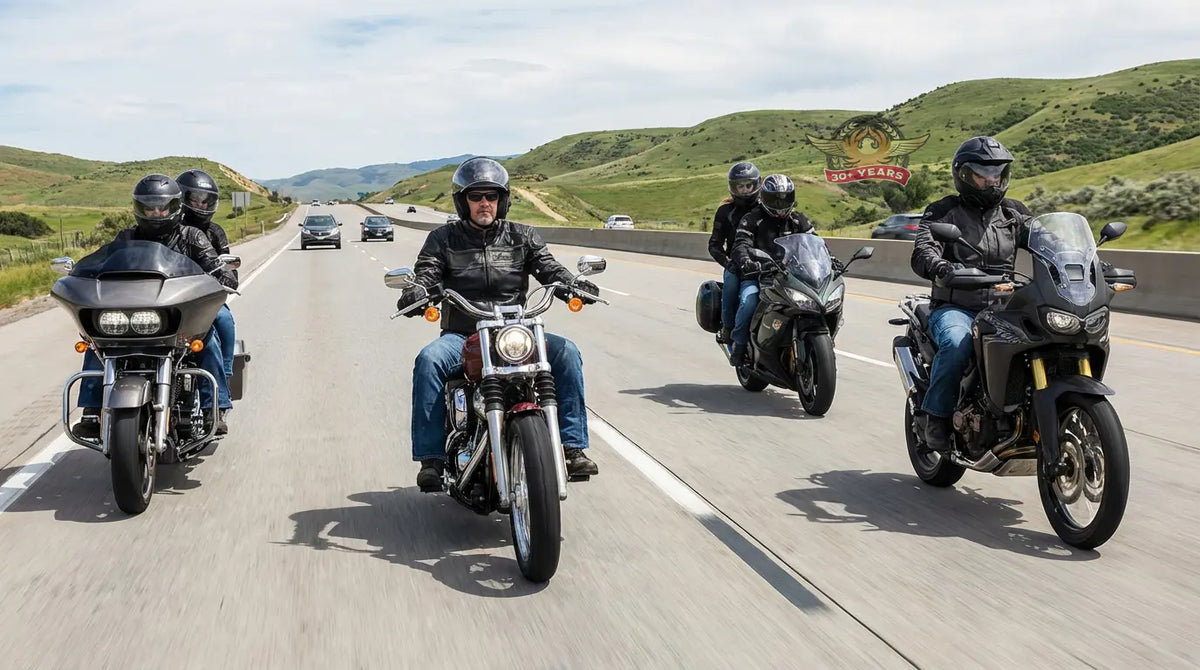
As group size increases, spacing becomes unavoidable. Mesh networking handles that reality by allowing riders to move naturally without breaking connectivity, making it especially effective for large group riding.
How better connectivity leads to calmer rides
Reliable communication reduces mental load. Riders don’t waste attention wondering who can hear them. Hazards are called out once. Lane changes and stops happen smoothly.
Mesh systems match real riding conditions
Traffic, terrain, and riding styles constantly change group spacing. Mesh systems adapt to that movement, whether the ride includes cruisers, street bikes, or touring and adventure motorcycles.
What mesh networking doesn’t promise
Mesh won’t fix poor ride planning or bad etiquette. It simply removes communication as a failure point—letting riders focus on the ride instead of managing their gear.