
Early Biker Culture Was Built on Utility, Not Identity
Biker culture has always been shaped more by reality than image. Early riders weren’t chasing a lifestyle — they were solving problems with machines that demanded constant attention.
Riding meant mechanical competence, self-reliance, and respect earned through experience, not labels.
Postwar Riding Shifted the Culture Toward Brotherhood
As motorcycles became more accessible after WWII, riding shifted from pure necessity to shared purpose. Brotherhood became visible, but expectations stayed grounded.
Competence still mattered. Image never replaced skill.
The Custom Era Brought Expression, Not Just Function
Improved reliability allowed riders to personalize bikes around how they actually rode. Style followed function, not the other way around.
- Cruisers for long highway miles
- Stripped-down builds focused on simplicity
- Touring bikes built for endurance
Modern Biker Culture Is Broader — and Less Centralized
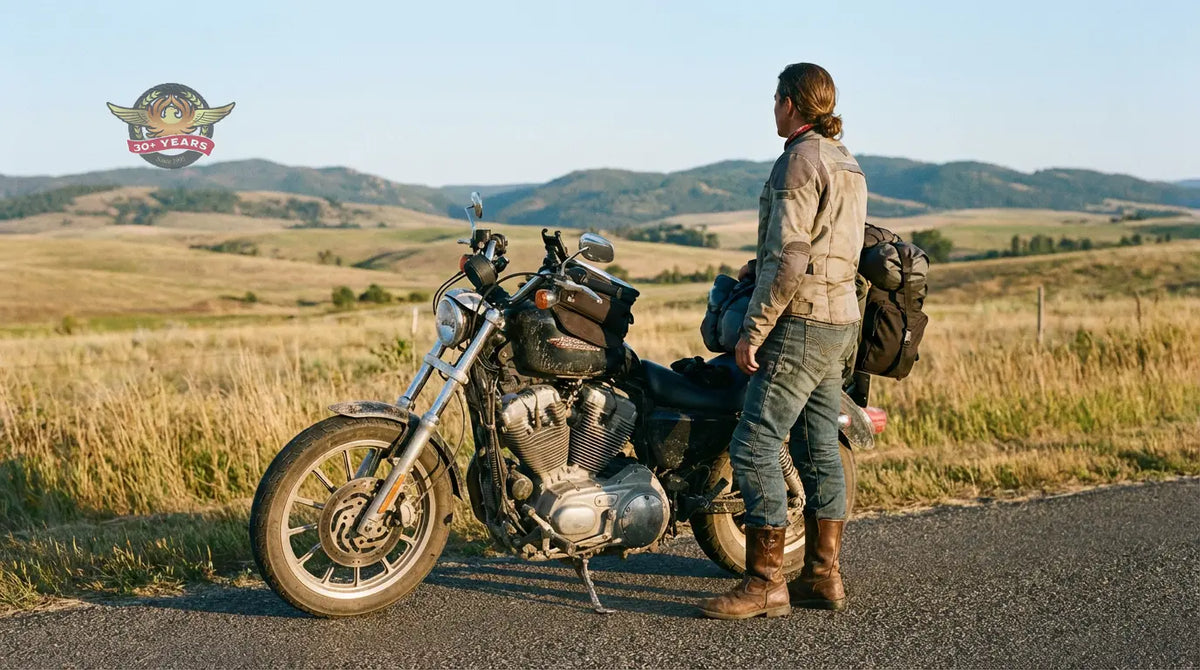
Today’s riders come from everywhere, with different priorities and backgrounds. Technology lowered barriers, but respect is still earned on the road.
The core values didn’t disappear — they became quieter.
What Never Changed Is Why People Keep Riding
Across every decade, riding offers clarity. It rewards focus, punishes ego, and strips away noise.
That consistency is the real throughline in biker culture history.
Biker Culture Didn’t Get Softer — It Got Smarter
Modern riders protect themselves better and ride farther. Hardship stopped being confused with credibility.
The edge is still there — it’s just intentional now.